
Scarred,
scared
& tired
Mumbai dying

On that fateful morning
On that fateful morning
as the Mumbai police made preparations to arrest

Bal Thackeray,
the shops began to close one by one.
By noon offices and schools had emptied
and taximen were urging one another to get off the roads.
What kind of metropolis is it that shuts down in an instant?
What kind of people are we that we would throw away
an indefinite number of man hours without a whimper?
The answer is a scarred city,
a scared city, a tired city.
As a student I once took part in a poster painting
As a student I once took part in a poster painting
competition on the subject
`Bombay Dying'.
The pictures we drew all had more or less
the same themes:
rotting slums,
grey smoke,
packed trains etc.
Ten years on things haven't changed.
Some findings in a recent study indicate
that air and noise pollution
are well above tolerable levels.
Seventy-five per cent of women in slums complain
of weakness and anemia,
50-60 of chronic gastro enteritis.
Fifty-five per cent of the city lives in slums;
25 per cent in dilapidated chawls;
over two million have no sanitation facilities.
Water supply is low;
the sewerage system is inadequate and outdated.


If the city is still
`alive'
it is only due to the spirit of its citizens
(remember the hoarding that
claimed a 99 per cent attendance
in offices the day after the bomb blasts?).
Signs are,
however, that the Mumbaikar's
famed resilience is at breaking point.
The average city-dweller is tired.
Tired
of the long commute
and trains that don't arrive on time
(an exhaustion that burst into a furious
assault on railway property
across the city some years ago).
Tired
of poor housing,
of leaking roofs and
the awareness that
at anytime the walls could come crashing down.
Tired
of the muddy water
that drips out of his taps.
Tired
of the strikes and the obstructions.
Tired
of corruption
-- the hostile policeman,
the greedy slumlord.
Tired
of the competition and the
high cost of living.
Tired
of fear.
There is an image
There is an image
that had become prominent on the streets in 1998.
It was a childish outline
of a human figure splattered on the ground.
Inside the figure
was a number you could call to report threats
by the underworld.
In the November of 1998 it was a useful number to have.
For the underworld,
it seemed, could strike anytime, anywhere.
If citizens did not react vociferously
If citizens did not react vociferously
it was perhaps partly
because they had got accustomed to sudden
and arbitrary bursts of terror.
The riots of December 1992,
the terrifying events of January 1993
and the bomb blasts weeks later.
Memories of those harrowing times
when the city's fabled cosmopolitanism
vanished in a blaze and bombs ripped through
its spine are still lurking beneath the surface
ready to push the panic button
(`Oh no, not again!')
at the slightest crackle in the wind.
And yet another legacy of those times
And yet another legacy of those times
is the fact that nobody got punished.
Not the leaders,
not the arsonists,
not the murderers.
So much for justice!
Over the last decade,
old-time residents in the narrow lanes
of the city's gangster-infested B ward
and
in the suburb of Bandra have seen buildings
with thin walls and plate glass windows
sprout up overnight next to their homes
blocking their access to light and air.
In other places tracts of open land have been
usurped by anti-social elements.
Complaining or resisting can be fatal.
Ranesh Kini was killed.
Even Khairnar was suspended,
symbolising the frustration of the middle class.
The sense of quiet desperation
The sense of quiet desperation
has been deepened by the growing scale of the city.
More and more people today
(almost 70 per cent of the population)
live outside the island city.
If the 1993 riots underscored the division of the city
along communal lines,
the tendency towards decentralisation
has created a host of suburbs -
- semi-rural outposts for the most part bristling with
cowsheds,
temples and rows of signboards
advertising doctors with dubious degrees
though an attempt at gentification is being made
with the emergence of upscale housing complexe and clubs.
With the growth of these self-sufficient enclaves,
many with their own newspaper editions and citizens groups,
the idea of Mumbai
has become less clear, more amorphous.
In the old Mumbai too
In the old Mumbai too
a sweeping change has taken place in the mindset.
The last few years
have underscored universal trends:
the shift from manufacturing to service;
the growing significance of the financial sector
and increased prosperity
(personal tax collections are up again,
43 per cent over last year).
The city
has always drawn the opportunist,
the fortune seeker.
Its disparities of wealth and poverty
have always been decried.
And
everybody who has heard the
Johnny Walker song knows that in Mumbai life is a bitch.
The thing about life in Mumbai
was that it had a certain sang froid.
Perhaps because there were so many sailing
in the same dream boat it engendered
a sense of sharing.
A visitor from the US wrote
about the protective hands that circled him
as he teetered on the footboard of a local train.
The Mumbaikar's
ambitions have always been tempered
with a certain amount of generosity
and openness, qualities that came from
a knowledge that everyone had a chance.
To that extent Mumbai had a touch of the`tapori' -
- the cocky streetside dreamer.
Today that sense
Today that sense
of irreverence has abated.
Wealth -
- the making,
the inheritance and the flamboyant spending of,
is being celebrated like never before.
And greed stands alone
in all its competitive ugliness.
Art,
ideas seem to have
little space in this new dispensation.
The vibrant feminist movement
of the eighties has been silenced
as have the leftists and the students' organisations.
Protest
has become the preserve of the fascist.
In August 1998,
BJP workers vandalised
a hospital following the death of a leader
from gunshot wounds.
Congress workers disrupted a play
for being anti-Gandhi.
The Shiv Sena's depredations against artists,
including Hussain,
have been well documented.
But
when a group of artists
sought support from a gathering of the city's
elite they received a cold reception.

The problem with Mumbai
is that the `tapori' has become a `bhai'.
For anyone unfamiliar with Mumbai lingo,
the `bhai' is a generic term
for a criminal with status.
He is the man who can give orders,
collect a few followers,
flash notes at a beer bar.
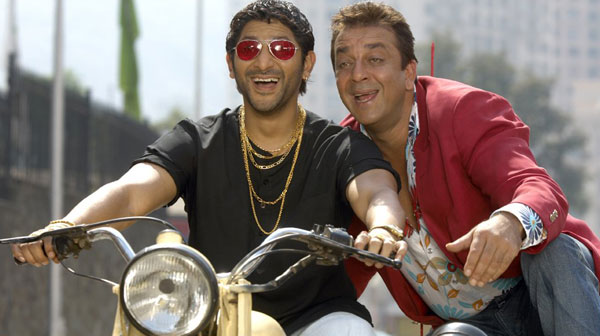
The difference between a
`tapori' and a `bhai'
is that the latter has a position to maintain.
And
it is that difference
which makes the `bhai' servile.
He is quick to ally himself
with the rising star.
He is careful not to cause offence.
He is willing to accommodate -- at any price.
So it is perhaps
why the majority of us do not object. Or question.
When the name of our city changes.
When public money is spent in haste.
When people issue threats.
We try and come to terms with the situation.
Make a `samjhauta', do a `mandvali'.
After all,
`khali fukat kaiko takleef modne ka'?
Blurb.
And yet another legacy
Blurb.
And yet another legacy
of those times is the fact
that nobody got punished.
Not the leaders,
not the arsonists,
not the murderers.
So much for justice!

--
Sriram Savarkar
Hinduism is more a way of life than a method of worship.
Dharmo Rakshati Rakshithaha
If you protect Dharma, Dharma will in turn protect you
--
Sriram Savarkar
Hinduism is more a way of life than a method of worship.
Dharmo Rakshati Rakshithaha
If you protect Dharma, Dharma will in turn protect you
------------------
DISCLAIMER :
------------------
This message serves informational purposes only and should not be viewed as an irrevocable indenture between anyone. If you have erroneously received this message, please delete it immediately and notify the sender at MumbaiHangOut-Owner@yahoogroups.com. The recipient acknowledges that any views expressed in this message are those of the Individual sender and no binding nature of the message shall be implied or assumed unless the sender does so expressly with due authority of The M.H.O. Group. M.H.O. reserves the right to repeal, change, amend, modify, add, or withdraw the contents herein without notice or obligation.
---------------------------------------------------
Note:- MHO is Not Responsible For Any Claims.
-------------------------- -------------------------
Contact The M.H.O. Core Team @
Owner : BooN@mumbaihangout.info
Chief Moderator : ApurvA@mumbaihangout.info
Moderator : Arnab@mumbaihangout.info
Moderator : Priya@mumbaihangout.info
Moderator : Debbie@mumbaihangout.info
Moderator : Vikas.Shah@mumbaihangout.info
DISCLAIMER :
------------------
This message serves informational purposes only and should not be viewed as an irrevocable indenture between anyone. If you have erroneously received this message, please delete it immediately and notify the sender at MumbaiHangOut-Owner@yahoogroups.com. The recipient acknowledges that any views expressed in this message are those of the Individual sender and no binding nature of the message shall be implied or assumed unless the sender does so expressly with due authority of The M.H.O. Group. M.H.O. reserves the right to repeal, change, amend, modify, add, or withdraw the contents herein without notice or obligation.
---------------------------------------------------
Note:- MHO is Not Responsible For Any Claims.
-------------------------- -------------------------
Contact The M.H.O. Core Team @
Owner : BooN@mumbaihangout.info
Chief Moderator : ApurvA@mumbaihangout.info
Moderator : Arnab@mumbaihangout.info
Moderator : Priya@mumbaihangout.info
Moderator : Debbie@mumbaihangout.info
Moderator : Vikas.Shah@mumbaihangout.info
MARKETPLACE
Earn your degree in as few as 2 years - Advance your career with an AS, BS, MS degree - College-Finder.net.

Change settings via the Web (Yahoo! ID required)
Change settings via email: Switch delivery to Daily Digest | Switch format to Traditional
Visit Your Group | Yahoo! Groups Terms of Use | Unsubscribe
.
__,_._,___

0 comments:
Post a Comment